
From Awareness to Action: How Greek Educators Are Turning Neurodiversity into Daily Classroom Practice
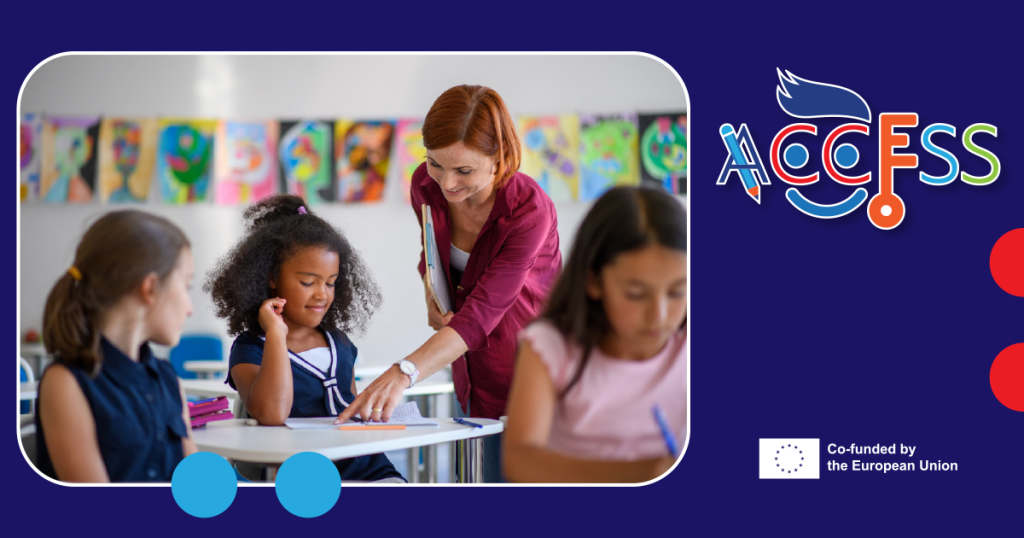
The Gap Between Knowing and Doing There is a particular kind of frustration that many teachers know well. They have attended the workshops, read the guidelines, and understand — in principle — that students with dyslexia, dysgraphia, dyscalculia, or attention-related difficulties require differentiated support. And yet, on a Tuesday morning with thirty students in the room […]
ACCESS Project Piloting Phase Launched Across Europe

The piloting phase of the ACCESS in Learning Difficulties project has officially begun in partner countries: Lithuania, Greece, Spain, Romania, and Italy. This exciting phase marks a key step in testing the project’s innovative e-learning course, designed specifically for primary school teachers. About the E-Learning Course The ACCESS e-learning program empowers teachers with the skills […]
Open Event in Lithuania, Joniškis: Sharing Experience and Building Connections

On November 26, 2025, English language teachers from Joniškis and Pakruojis districts gathered at the Joniškis District Education Centre for an open professional development event. The meeting provided a valuable opportunity to share good practices, exchange ideas, and draw inspiration from colleagues working in the field of foreign language education. During the event, six educators […]
ACCESS Newsletter 2 Is Out!

The 2nd newsletter of the ACCESS project is available, bringing together the latest highlights and milestones from across the partnership. This edition looks back at an important period for the project, including the 2nd Transnational Project Meeting in Lithuania, where partners reviewed progress, exchanged ideas, and planned the next steps. It also celebrates a key […]
The Staff Joins ACCESS: Progress Presentation and Call to Action at San Félix Ikastola

The ACCESS coordinators at San Félix Ikastola met with the teaching staff to present the work carried out so far and outline the next steps for expanding the project across the entire school. The session had a dual aim: to share progress and to engage all teachers through participation in the consortium’s digital course. […]
Building Inclusive Learning Together: ACCESS Partners Meeting in Lithuania

On 25–26 September 2025, the partners of the ACCESS project gathered in Vilnius and Joniškis, Lithuania, for two days of exchange, collaboration, and forward-looking planning. During the first day we visited JONIŠKIO “SAULĖS” PAGRINDINĖ MOKYKLA, a school well-known in the region for its strong commitment to inclusion and personalized support for learners with learning difficulties. […]
Building Inclusive Classrooms in Romanian Schools: Supporting Dyslexia, Dysgraphia, and Dyscalculia — and How Project Access Helps

When the bell rings at 8:30, our hallway fills with shoelaces, backpacks, and the small thunder of children who are still waking up. On the classroom door, the day’s plan is sketched with pictures—reading, writing, math, art—because predictability is a kindness. Inside, we start the morning the same way: a deep breath together, a quick […]
Bridging the Gap in Learning Difficulties: Lithuania’s Path to Inclusive Education and the Role of Project ACCESS
Lithuania has taken significant steps toward building a more inclusive education system. For years, certain educational institutions have embraced inclusive practices, but a major milestone was reached in September 2024, when a legal amendment to the Law on Education came into force. This law now requires that all schools and kindergartens admit children with special […]
Explore Our First Newsletter!

We’re excited to share the very first edition of the ACCESS Newsletter — a fresh look at how the project is taking its first steps toward building more inclusive classrooms across Europe. In this issue, you’ll get a snapshot of what ACCESS is all about: our mission to support children aged 6–10 with learning difficulties, […]
Inclusive Classrooms in Practice

The mission of ACCESS is to create inclusive classrooms where every child can thrive. By equipping teachers with the right tools and knowledge, offering practical advice to parents, and strengthening cooperation between families and educators, the project strives to ensure early identification and effective support for children with learning needs. In January, the project partners […]

