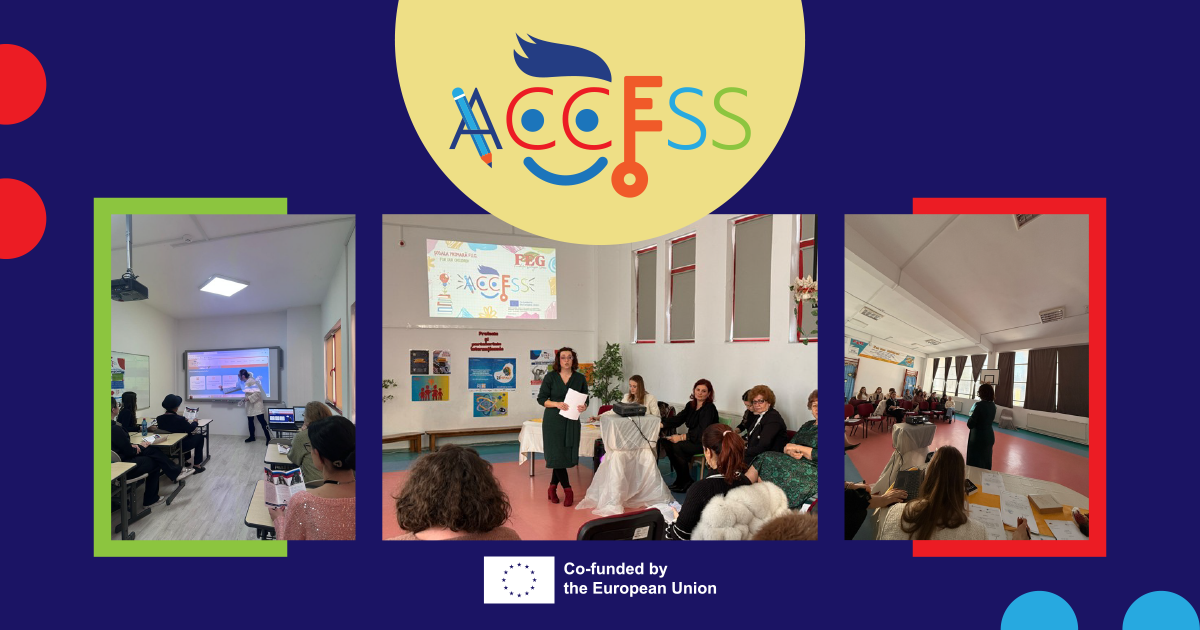
September is a busy month in every primary school. Teachers are learning new names, setting up classroom routines and getting a first sense of how each child is doing. It is often in these early weeks that a teacher notices something. A pupil might avoid reading aloud, mix up numbers or lose focus halfway through a task. Spotting it is one thing. Knowing what to do next is harder.
This is where the ACCESS Digital Library can help. We created it for primary school teachers, special education specialists and parents who support children with emerging learning difficulties. It is free to use and available on the project website.
The library is organised by topic, so you don’t have to search through everything to find something useful. There are materials on literacy and mathematics, on executive functions such as attention, planning and memory, and on socio-emotional learning. There is also a section of educational games and a section with guidance for adults. All the materials are evidence-informed, but they were written with real classrooms in mind. Most activities can be used as they are or easily adapted to a particular group of pupils.
The library works well alongside the ACCESS e-learning course for primary school educators. The course explains how learning difficulties show up and why. The library gives teachers something concrete to try the next day. Parents can use it too. Some of the materials were made with home in mind, because children do best when school and family work in the same direction.
At the moment the library is available in English. Translations are on the way, and soon teachers and families will be able to use it in all the partner languages: Lithuanian, Greek, Italian, Romanian, Spanish and Basque.
If you are planning your first lessons of the year, or thinking about a pupil who needs a bit more support, take a look:
https://access-edu.eu/digital-library/
The ACCESS project (2024-1-LT01-KA220-SCH-000257029) is co-funded by the Erasmus+ Programme of the European Union.